AI · SEMICONDUCTOR · FACT CHECK
 SKD WIRE
True
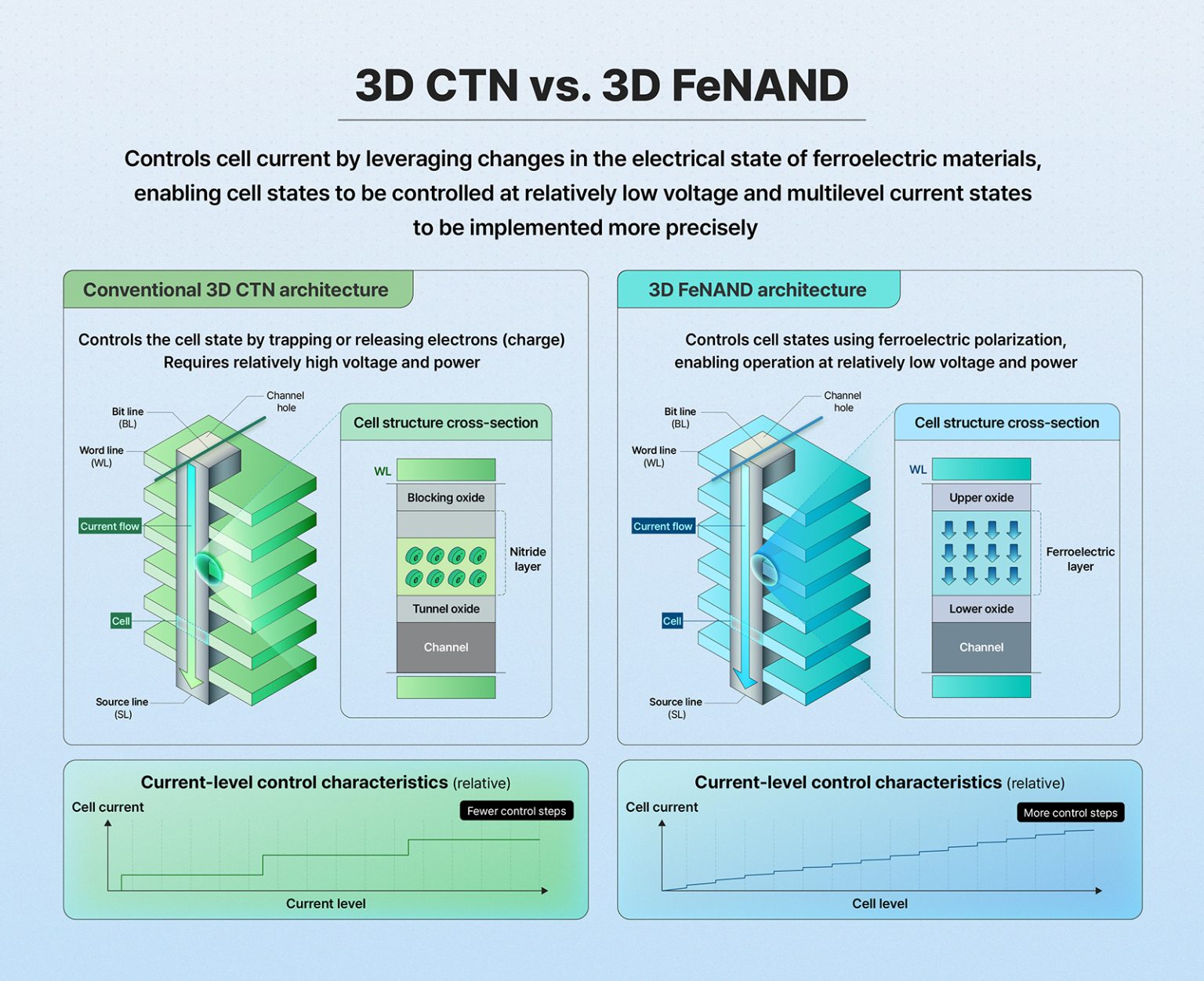
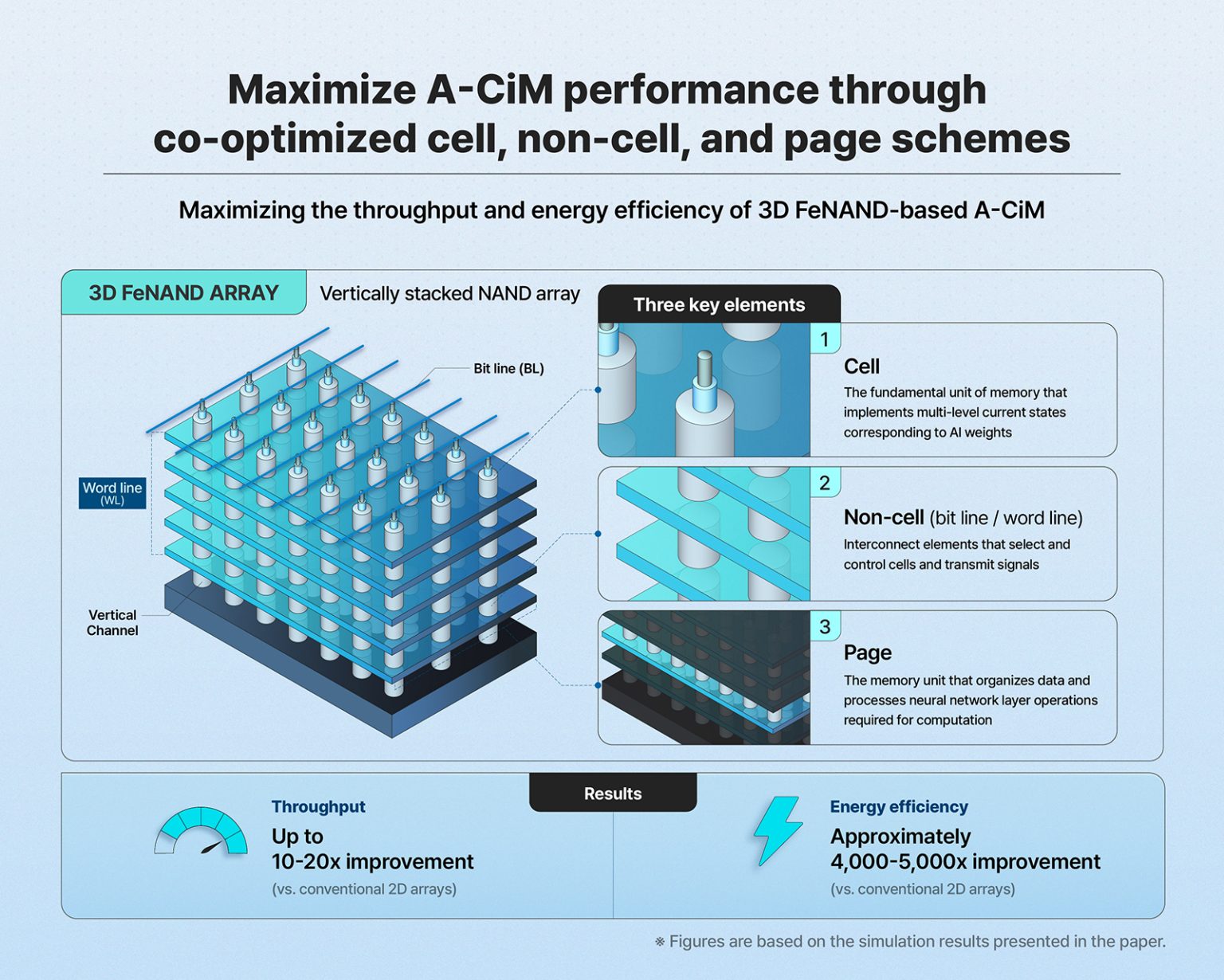
SK hynix has disclosed research achievements related to its 3D FeNAND A-CiM (compute-in-memory) technology, presenting findings in the emerging field of NAND-based processing. The announcement, based on materials reviewed across 11 primary sources, describes the company's work on integrating compute functionality directly into 3D ferroelectric NAND flash.
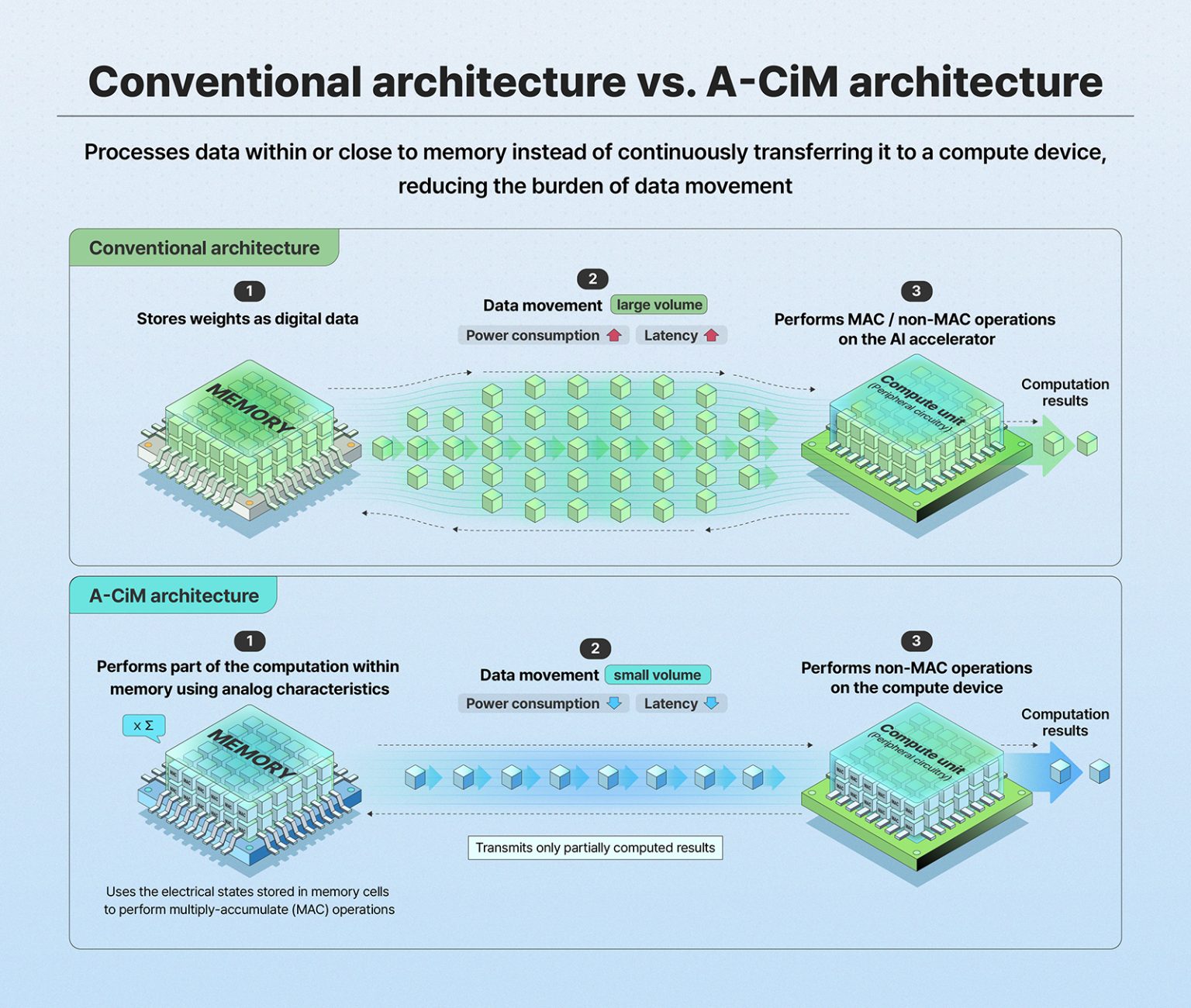
The research centers on A-CiM, an approach that performs computation within the memory itself rather than moving data between memory and a processor. Applying this concept to 3D FeNAND, which uses ferroelectric material in NAND flash cells, SK hynix presented results on how the technology could support AI workloads by reducing the data movement that typically dominates power consumption and latency in AI systems.
The company's disclosure outlines the technical direction of the work, though detailed performance specifications and commercialization timelines were not provided in the materials reviewed.
SK hynix, a major supplier of high-bandwidth memory for AI accelerators, has been broadening its research into next-generation memory architectures suited to AI computing. The 3D FeNAND A-CiM work reflects an effort to explore compute-in-memory capabilities within the NAND domain, complementing the company's more established DRAM- and HBM-focused AI memory portfolio.
The announcement comes as memory makers worldwide invest in processing-near- and in-memory designs aimed at easing bottlenecks in large-scale AI model training and inference.
The published results are research findings rather than a product roadmap. Questions over volume-production feasibility, cost structure and integration into customer systems remain unresolved, and no commercialization schedule has been stated in the disclosed materials.
Based on the 11 primary sources reviewed, the claim that SK hynix publicly presented its 3D FeNAND A-CiM research achievements is True.