Government-backed 210 billion won AI talent program left one in three graduates without jobs
Mostly True

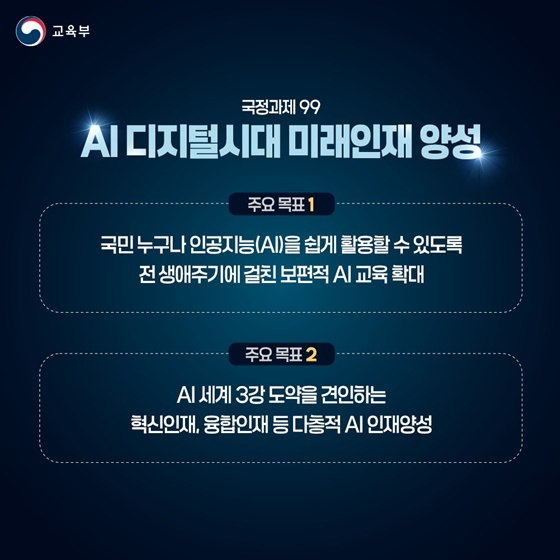
A government initiative that invested roughly 210 billion won to train AI specialists has come under scrutiny after it emerged that about one in three participants in the program failed to find employment, fueling debate over the effectiveness of Korea's large-scale AI workforce spending.
Massive investment, mixed outcomes
The program, funded with approximately 210 billion won, was designed to cultivate AI talent to meet surging demand for specialists in fields such as large language models and semiconductor-linked AI development. However, roughly a third of those who went through the training have not secured jobs, according to figures cited in the claim.
The employment gap has raised questions about whether the training matched the actual hiring needs of Korean industry, where companies including Samsung Electronics, SK hynix, Naver and Kakao have been competing for AI expertise.
Debate over program design
Critics point out that producing AI graduates does not guarantee employment if skills do not align with what employers seek, and that job placement rates should be a core metric for publicly funded workforce programs. The discrepancy between the scale of investment and the employment outcome has become a point of contention in discussions over future AI education budgets.
Details such as the exact program period, the number of trainees and which ministry administered the funds were not specified in the material reviewed, so those figures remain unconfirmed here.
The claim that a 210 billion won AI talent development program left roughly one in three participants without employment is Mostly True.
Verdict: Mostly True
- https://www.safetimes.co.kr/news/articleView.html?idxno=246016
- https://www.edaily.co.kr/News/Read?newsId=01777766645584056
- https://web.archive.org/web/20260926214822/https://www.safetimes.co.kr/news/articleView.html?idxno=246016
- https://www.moe.go.kr/boardCnts/viewRenew.do?boardID=294&boardSeq=104462&lev=0&searchType=null&statusYN=W&page=1&s=moe&m=020402&opType=N
- https://v.daum.net/v/20250620043126834
- https://www.aitimes.com/news/articleView.html?idxno=206963
- https://www.m-i.kr/news/articleView.html?idxno=1417296
- https://www.mt.co.kr/tech/2026/09/07/2026090708571364602
- https://www.ntoday.co.kr/news/articleView.html?idxno=127891
- https://www.msit.go.kr/bbs/list.do?sCode=user&bbsSeqNo=94&page=1
- https://www.korea.kr/newsWeb/resources/attaches/2025.11/11/2bb6d0bedeb6962b4b3f228b0c4bbe56.jpg
- https://www.korea.kr/newsWeb/resources/attaches/2025.11/11/7c07cf6b1568baa30f2e0f05e20de816.jpg