AI · SEMICONDUCTOR · FACT CHECK
 SKD WIRE
Mostly True
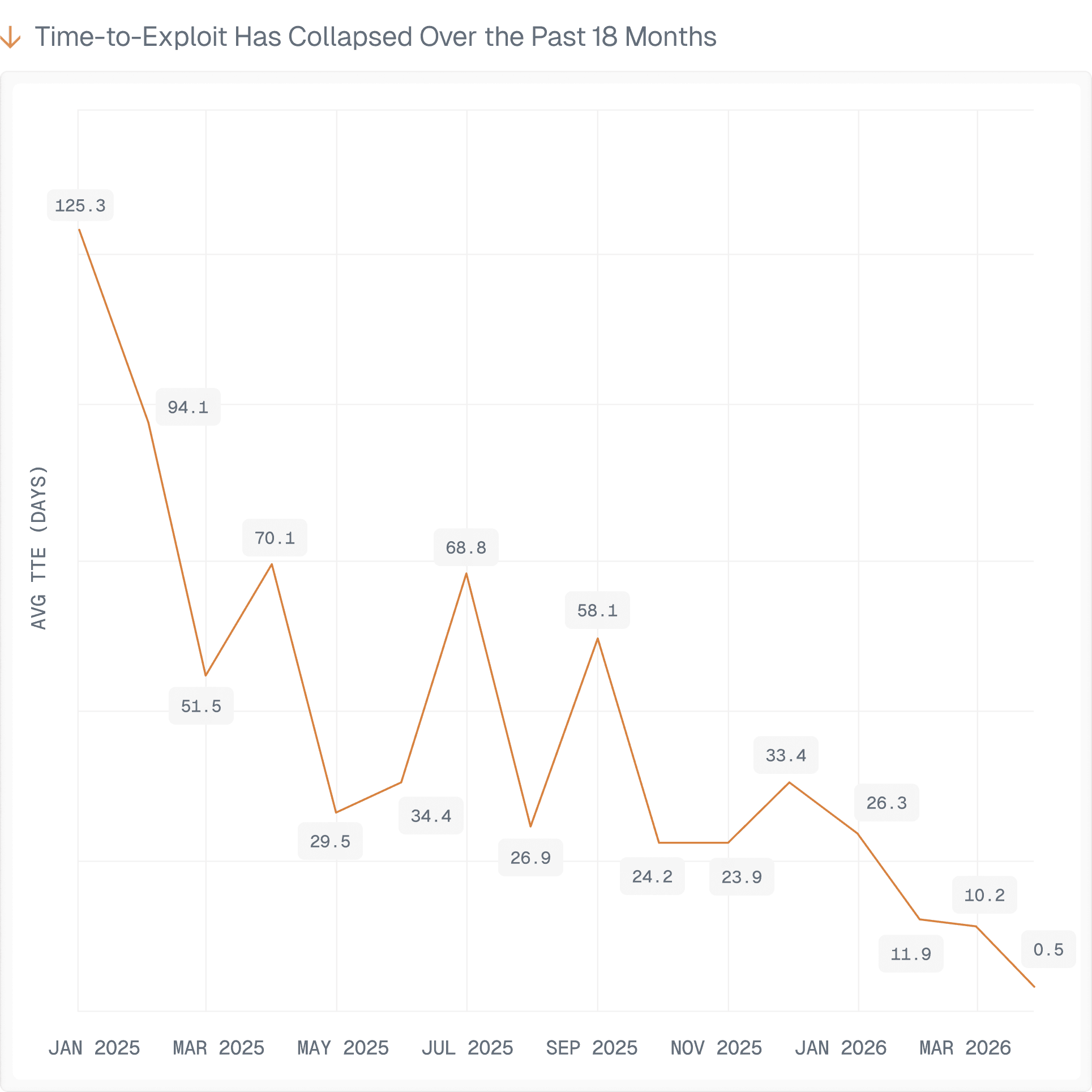
The interval between the release of a security patch and the appearance of working exploit code has shrunk dramatically, from an average of 125 days to roughly half a day, according to a figure cited in research on the accelerating exploitation of software vulnerabilities.
The comparison, illustrated in a timeline graphic from the research, shows a compression of what was once a months-long grace period after patches became available. Where defenders previously had more than four months before attack code emerged in the wild, exploit code can now appear within hours of a vulnerability being disclosed and patched.
The trend places mounting pressure on organizations to patch immediately upon release, as the traditional assumption that attackers need weeks or months to develop working exploits no longer holds. State bodies with cybersecurity mandates, including the National Intelligence Service and the Ministry of Science and ICT, have been among the institutions monitoring this shortening window.
For semiconductor and PC hardware makers — including Samsung, SK hynix and LG — as well as platform companies such as Naver, Kakao and Coupang, the narrowing window raises the operational cost of delayed patch deployment across enterprise and product environments. The pace of exploitation is expected to continue increasing as automated tooling lowers the barrier to developing exploit code, though the research does not provide projections on future timelines.
Based on the evidence reviewed, the claim that the time to exploit code has fallen from 125 days to half a day is Mostly True.