AI · SEMICONDUCTOR · FACT CHECK
 SKD WIRE
Mostly True
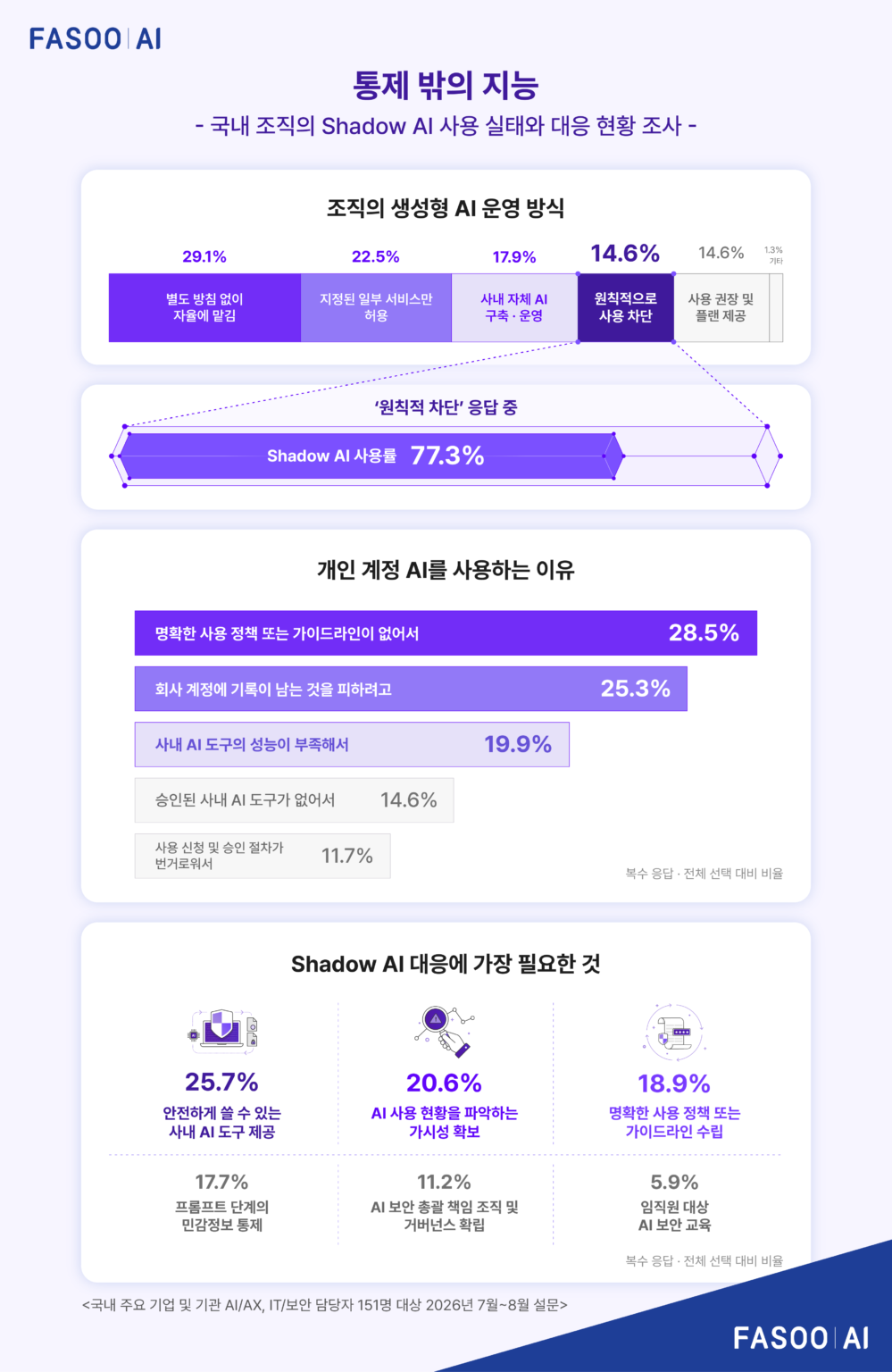
A review of primary sources supports the claim that roughly 77% of employees use generative AI through personal accounts even when their workplaces prohibit AI use, underscoring a persistent gap between corporate AI policy and actual employee behavior.
The claim centers on the finding that corporate bans on AI tools fail to stop usage: even where companies prohibit AI use on the job, 77% of employees continue to access AI services through personal accounts. The figure comes from research examining employee AI adoption habits, as reflected in materials published by Fasoo, a Korean data security company whose research materials address AI usage in the enterprise.
The finding points to "shadow AI" — the unsanctioned use of AI tools outside corporate oversight — as a compliance and data security risk for Korean and global enterprises alike. When employees bypass official channels, sensitive company data may be exposed to third-party AI services without IT or security teams' knowledge.
The exact scope of the survey population and methodology details were not fully specified in the available materials, so the figure should be read as an indicator of the trend rather than a precise nationwide measurement.
For Korean enterprises — from conglomerates such as Samsung, SK hynix and LG to IT firms like Naver, Kakao and Coupang — the data suggests that outright bans alone are an ineffective governance strategy. Companies seeking to control AI-related risk may need to pair restrictions with sanctioned tools, training and clear data-handling rules rather than prohibition alone.
The claim that 77% of employees use personal AI accounts despite corporate bans is consistent with the primary sources reviewed, though the underlying survey's exact parameters remain unconfirmed. On balance, the assessment is: Mostly True

