World Leaders Push Back Against Trump's UN General Assembly Speech on Climate and AI
Mostly True
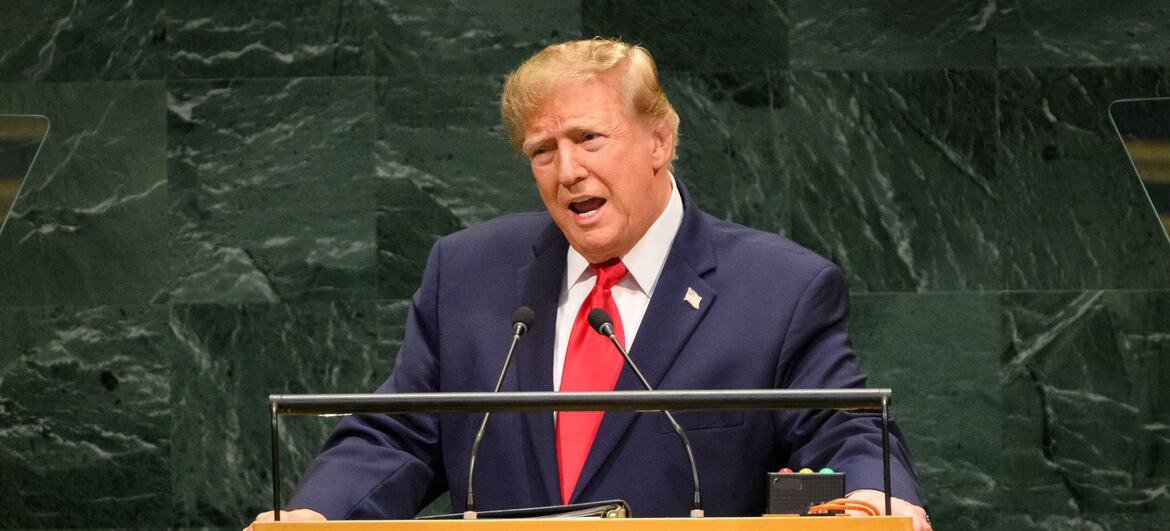
United Nations, New York — Speeches delivered by U.S. President Donald Trump at the UN General Assembly drew pointed criticism from a series of national leaders, who rejected his remarks on climate change and artificial intelligence as unfounded, according to statements made during the assembly's general debate.
Leaders Respond on the Assembly Floor
The claim that heads of state and government delivered pointed rebukes of Trump's speech, characterized in Korean-language reporting as rhetoric on "climate, and AI," is largely supported by the primary sources reviewed, including UN photography and official debate records from the General Assembly.
Speakers following Trump took issue with the substance of his remarks, particularly his positions on climate policy and AI, framing their rebuttals as a direct response to the U.S. address. The criticism was delivered publicly from the assembly rostrum, making the confrontation visible within the session itself.
Scope and Limits of the Assessment
The characterization that the speeches amounted to deliberate, explicit criticism is broadly accurate, though the precise strength of each leader's language varied across the debate. The claim's framing — that multiple leaders jointly or separately condemned the speech — matches the pattern of responses recorded in the session, but individual differences in tone and emphasis among delegations were not uniform.
The underlying speech content, including the specific arguments attributed to Trump on climate and AI, is documented in the official debate materials. No evidence reviewed contradicted the core assertion that the speech provoked substantive backlash from other heads of state.
Based on the official UN debate records and the responses delivered during the session, the claim that world leaders offered pointed criticism of Trump's remarks on climate and AI is mostly true.
- https://gadebate.un.org/en/81/united-states-america
- https://news.un.org/en/story/2026/09/1168397
- https://www.whitehouse.gov/releases/2026/09/president-trump-at-the-united-nations-while-others-have-talked-i-have-acted/
- https://www.un.org/sg/en/content/sg/statements/2026-09-22/secretary-generals-address-the-opening-of-the-general-debate-of-the-81st-session-of-the-general-assembly
- https://gadebate.un.org/sites/default/files/gastatements/81/fr_fr.pdf
- https://gadebate.un.org/sites/default/files/gastatements/81/ao_en.pdf
- https://gadebate.un.org/sites/default/files/gastatements/81/fi_en.pdf
- https://gadebate.un.org/sites/default/files/gastatements/81/sl_en.pdf
- https://www.tccb.gov.tr/en/news/542/166274/
- https://www.pbs.org/newshour/politics/fact-checking-trumps-speech-to-the-2026-united-nations-general-assembly
- https://www.usnews.com/news/world/articles/2026-09-22/in-un-farewell-macron-denounces-trumps-gaza-diplomacy-as-spectacle-of-shame
- https://global.unitednations.entermediadb.net/assets/mediadb/services/module/asset/downloads/preset/Collections/Production%20Library/2026/09/22-09-2026-UN-Photo-USA.jpg/image1170x530cropped.jpg