Despite Semiconductor Boom, Korea's Potential Growth Rate Stuck at 1% Range
Mostly True
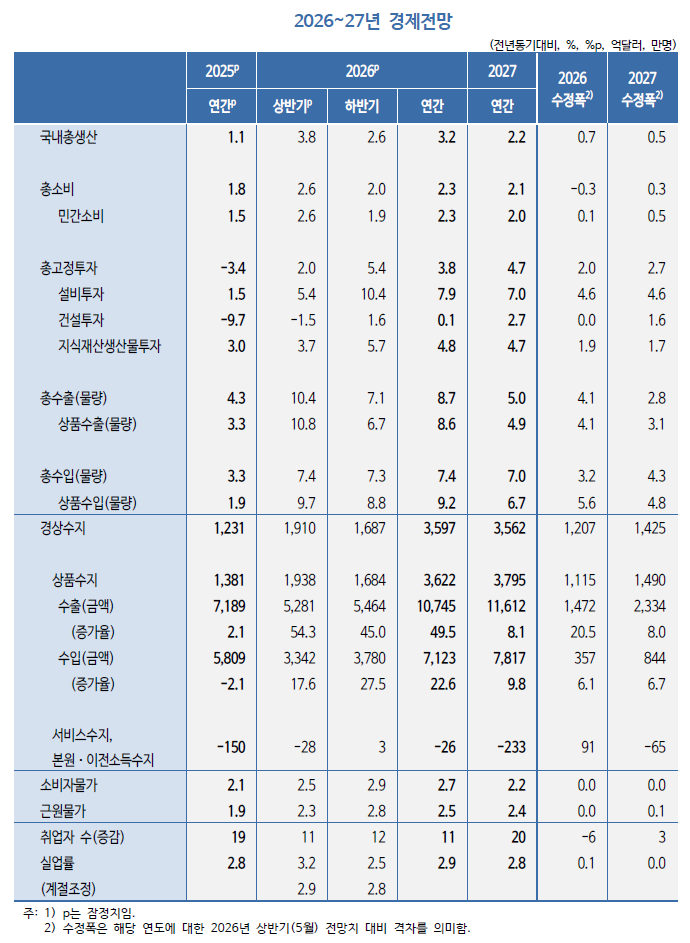
South Korea's economy is failing to convert the recent semiconductor boom into a lasting improvement in its "fundamental strength," with the country's potential growth rate remaining fixed in the 1% range, according to an analysis of available economic data.
Boom Without Structural Gains
The semiconductor industry has delivered strong performance, with memory chipmakers benefiting from favorable market conditions. Yet this upswing has not translated into a recovery of the economy's underlying growth capacity, which remains anchored at low levels.
The potential growth rate — the pace an economy can sustain without stoking inflation — reflects a country's fundamental productive capacity, shaped by labor supply, capital investment and technological progress. Korea's rate staying in the 1% range indicates that the boom in chips, while lucrative for exporters such as Samsung Electronics and SK hynix, has not lifted the broader economy's structural foundations.
Weak 'Fundamental Strength'
The stagnation suggests that the recent cycle-driven profits in the semiconductor sector are masking deeper weaknesses: a shrinking workforce, slowing productivity and limited new growth engines. Unless these structural factors improve, analysts warn, periodic chip booms will not reverse the downward drift in potential growth.
The pace of the semiconductor recovery alone, therefore, offers an incomplete picture of Korea's economic health. The core issue is whether cyclical gains can be converted into durable gains in productivity and investment capacity.
Verdict: Mostly True
- https://www.yna.co.kr/view/AKR20260425041300002
- https://www.bok.or.kr/portal/bbs/P0002359/view.do?nttId=10098209
- https://www.kdi.re.kr/research/economy?pub_no=19077
- https://www.kdi.re.kr/research/analysisView?art_no=3671
- https://www.nabo.go.kr/ko/notice/releasesView.do?idx=8924
- https://www.bok.or.kr/portal/bbs/B0000501/view.do?nttId=10097644&menuNo=201264
- https://www.kdi.re.kr/research/economy
- https://www.newsis.com/view/NISX20260211_0003511411
- https://www.oecd.org/en/publications
- https://www.kdi.re.kr/upload/publication/19259/editor/77BCDEC8E0_20260819094728.png
- https://img4.yna.co.kr/photo/cms/2024/06/14/79/PCM20240614000079990_P4.jpg
- https://img6.yna.co.kr/photo/cms/2023/01/25/63/PCM20230125000063990_P4.jpg