AI · SEMICONDUCTOR · FACT CHECK
 SKD WIRE
Mostly True
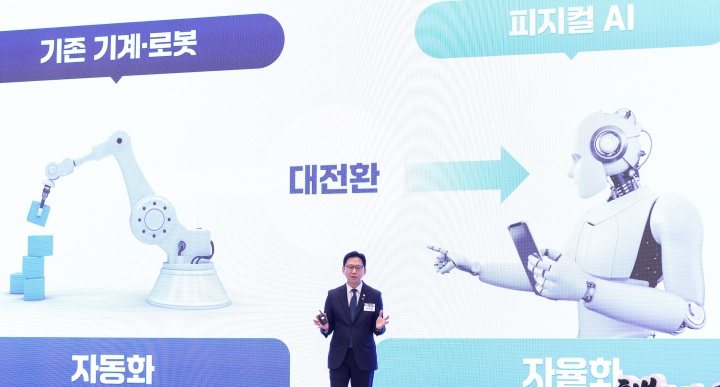
South Korea's sweeping AI strategy has been framed around a headline figure of 1,600 trillion won in investment, a sum that captures the scale of the country's ambitions across AI infrastructure, semiconductors and computing power. The number is broadly accurate as a description of announced plans, though it represents cumulative and aspirational commitments rather than a single, immediately deployable budget.
The 1,600 trillion won figure refers to large-scale investment commitments tied to South Korea's bid to become a leading AI nation, spanning data centers, AI infrastructure and the semiconductor supply chain that underpins it. Major Korean conglomerates, including Samsung and SK hynix, are central players, given the country's dominance in memory chips such as HBM (high-bandwidth memory) that fuel AI computing.
The figure has circulated widely in Korean coverage of the government's AI agenda and associated private-sector pledges, serving as shorthand for the scale of the national effort.
The 1,600 trillion won is not a single appropriations bill or a confirmed government expenditure. It aggregates announced plans and intentions, much of it dependent on private capital, future board decisions and favorable market conditions. As with any long-horizon investment pledge, execution timelines and final amounts remain subject to change.
Government bodies such as the Ministry of Science and ICT have paired the investment push with policy initiatives on AI regulation, data infrastructure and national computing resources, while agencies including the National Intelligence Service are involved in AI security matters.
Korea's AI gamble rests heavily on its semiconductor industry. Samsung's foundry and memory operations, along with SK hynix's position in HBM supply, give the country an outsized role in the global AI hardware chain. Sustained investment in advanced packaging, fab capacity and next-generation memory is a core component of the broader spending plans captured in the headline figure.
Whether the full 1,600 trillion won materializes will depend on global AI demand, semiconductor market cycles and the ability of Korean firms and the government to convert announcements into concrete outlays.
The claim that Korea is staking its AI future on a 1,600 trillion won investment push is Mostly True — the figure accurately reflects announced plans and commitments, but it is an aspirational aggregate rather than guaranteed spending.
Verdict: Mostly True