AI · SEMICONDUCTOR · FACT CHECK
 SKD WIRE
Mostly True

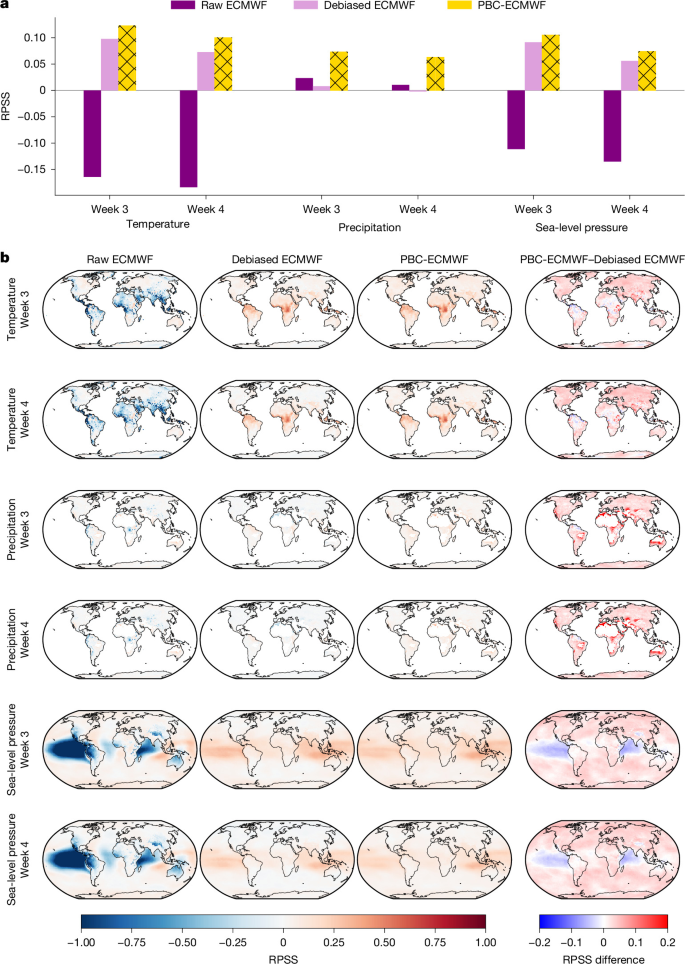
An international research team including MIT researchers has developed an AI-based framework that roughly doubles the accuracy of long-range weather forecasts in the 2-to-6-week range, achieving predictions that go beyond the accuracy of relying on climate averages. The finding was published in the journal Nature.
Long-range forecasts covering two to six weeks have long been considered a difficult zone between short-term weather prediction and seasonal outlooks, and forecasters have often defaulted to using climate averages as a baseline. The research team's AI framework achieved forecast accuracy roughly twice that of conventional approaches in this window, outperforming a strategy of simply using climate averages.
The claim that accuracy was "doubled" is a condensed representation of an international joint research effort, and taking the figure at face value involves some simplification; the underlying results reflect a collaborative study rather than a single MIT experiment alone.
If the framework holds up in operational use, improvements in the 2-to-6-week window could benefit sectors such as agriculture, energy planning, and disaster preparedness, where forecasts at this horizon carry practical value.
The research was published in Nature, and images and documentation of the framework have been released through Microsoft Research and MIT News channels.
The claim that an MIT-led team used AI to roughly double the accuracy of 2–6 week long-range weather forecasts and surpassed climate averages is broadly accurate, though the "doubled" figure is a condensed expression of an international joint study. Verdict: Mostly True