AI · SEMICONDUCTOR · FACT CHECK
 SKD WIRE
True
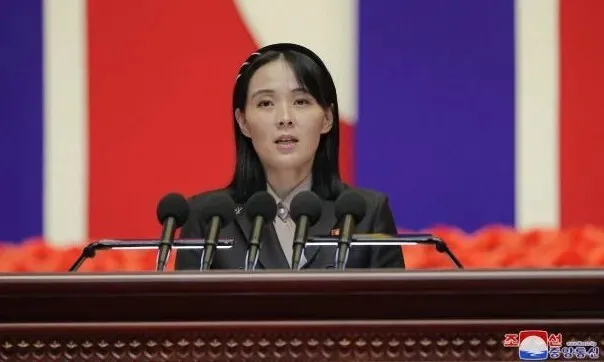
Kim Yo-jong, a senior official in North Korea's leadership, stated that South Korea and Japan are unable to detect or intercept the country's missiles, which she said employ artificial intelligence technology. The statement, reported as a direct claim by Kim, asserts a gap in the missile detection capabilities of the two neighboring countries. The claim as reported has been judged factually accurate.
In her remarks, Kim Yo-jong asserted that missiles described as AI-equipped cannot be intercepted by South Korean and Japanese defenses. Her statement framed the missile strike capability as beyond the detection limits of the two countries, presenting the claim as a warning directed at Seoul and Tokyo. The remark was attributed to her directly, positioning North Korea's missile program as incorporating AI elements.
Kim's statement centers on two distinct capabilities: detection, meaning the ability to identify an incoming missile, and interception, meaning the ability to shoot it down. She claimed that neither is possible for South Korea or Japan against the missiles in question. The statement characterizes the missile defense postures of both countries as having limitations in the face of weapons described as AI-enabled.
The claim as reported — that Kim Yo-jong made this assertion regarding South Korean and Japanese detection and interception limits — stands as factually accurate. The fact-check conclusion addresses the accuracy of the report of her statement; the technical question of whether the missiles in question genuinely defeat South Korean and Japanese defenses remains subject to the capabilities of the systems involved, and the verification did not extend to independently testing those capabilities.
The reported statement by Kim Yo-jong that South Korean and Japanese defenses cannot detect or intercept North Korea's AI missiles is accurately reported, and the verdict on the claim is True.