AI · SEMICONDUCTOR · FACT CHECK
 SKD WIRE
Mostly True
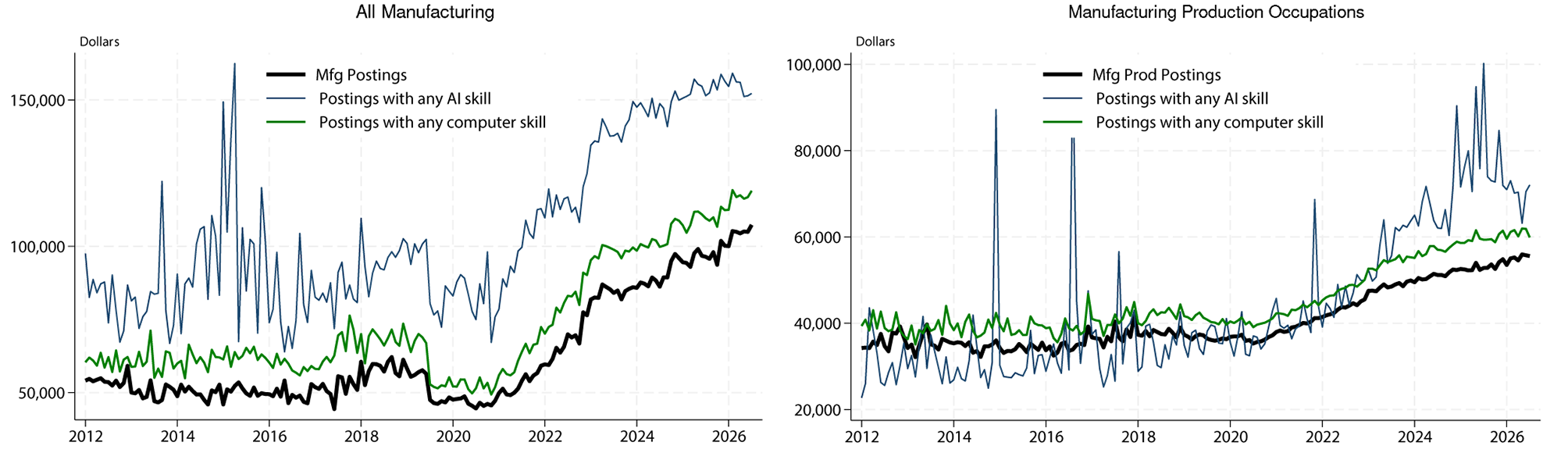
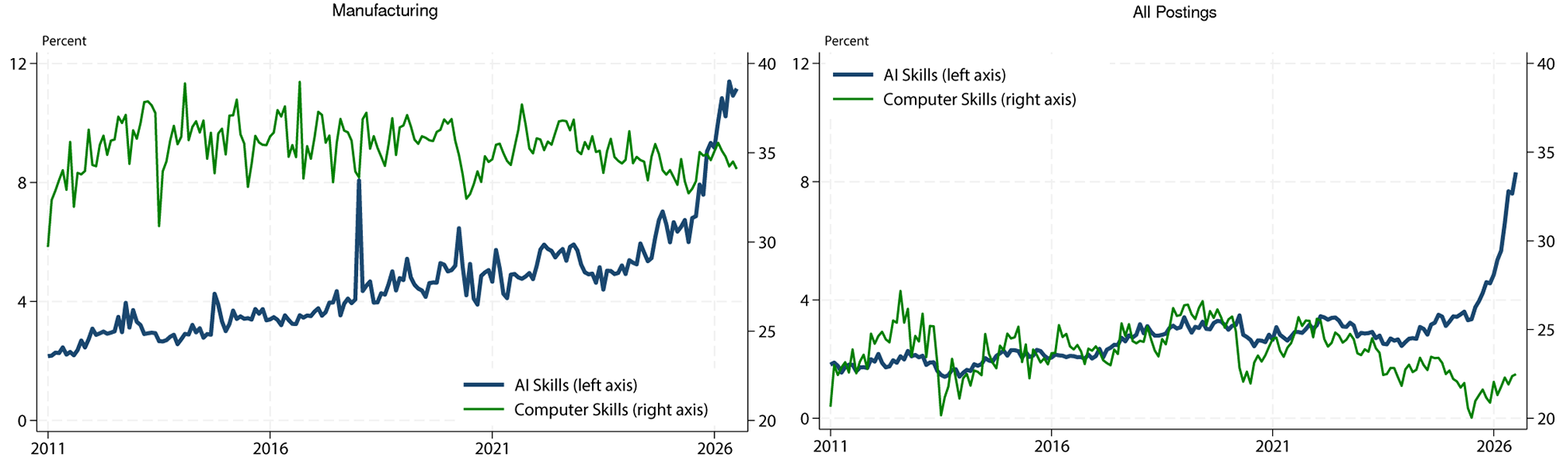
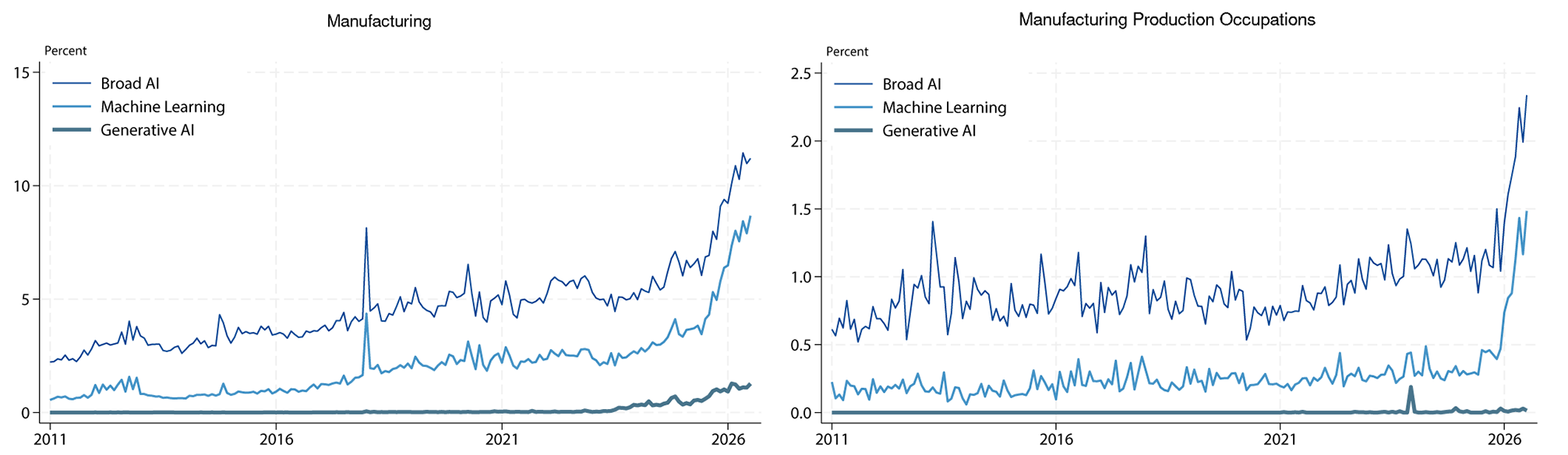
Workers in production roles who know how to use AI earn higher wages than comparable workers without such skills, according to a Federal Reserve research note on AI exposure and pay in the labor market.
The Federal Reserve note, which includes wage data broken down by occupation and AI-related skill, shows that the wage premium associated with AI ability is not limited to white-collar professions. Production workers with AI skills are paid more than their peers in the same job category who lack those skills.
The note does not quantify the exact size of the premium for production roles, and the figure should be treated as indicative rather than precise. The broader pattern, however, points in one direction: AI competence adds to pay across a range of occupations, including those on the factory floor.
For Korea's semiconductor and electronics manufacturing base, the finding suggests that wage growth on production lines may increasingly track AI adoption rather than tenure alone. As fabs and assembly operations deploy more automation and AI-assisted quality control, workers able to operate or work alongside those systems are positioned to capture higher pay.
The Federal Reserve data covers the U.S. labor market, so the size of any wage premium for Korean production workers remains unconfirmed. Korean wage statistics published by domestic agencies would be needed to establish whether the same pattern holds at Samsung Electronics, SK hynix or other major employers.
The claim that production workers earn higher wages if they know how to use AI is, on the weight of the Federal Reserve's evidence, mostly true.