AI · SEMICONDUCTOR · FACT CHECK
 SKD WIRE
True
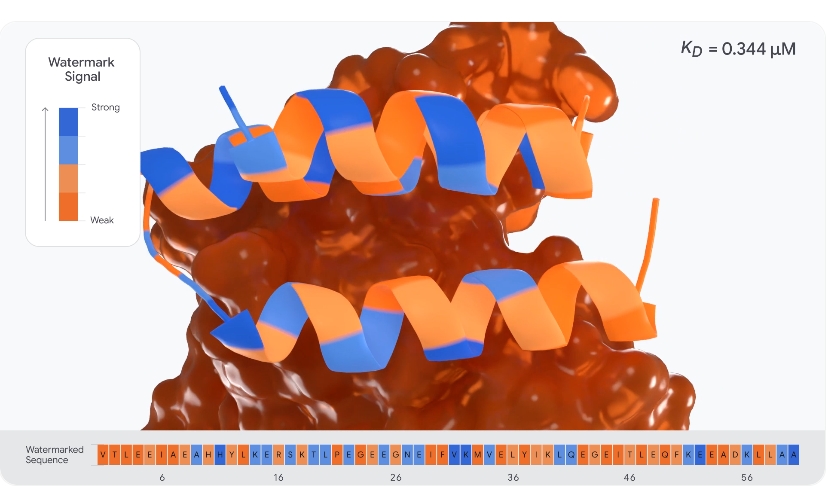
Google DeepMind has introduced SynthID Bio, a technique that embeds hidden identifiers — likened to fingerprints — into proteins designed by AI, allowing AI-generated biological sequences to be distinguished from natural ones.
The system applies an invisible marker to AI-generated protein designs, similar in concept to watermarking techniques used for AI-generated text and images. The embedded fingerprints allow developers and researchers to identify whether a given protein sequence was produced by an AI model, addressing growing concerns around traceability and responsible use of AI in biology.
As generative AI models increasingly contribute to protein design and drug discovery, the ability to label AI-created biological material has become a focus for research organizations. SynthID Bio follows DeepMind's broader SynthID watermarking approach, extending it from digital media into the life sciences.
Specifics on how the embedded fingerprints are detected, and what performance trade-offs the technique introduces, have not been fully detailed in the available materials.
The claim that Google DeepMind has unveiled SynthID Bio to embed 'fingerprints' in AI-designed proteins is True.