OpenAI's Navier-Stokes "Proof" Faces Backlash — Critics Say It Was Not a Problem Mathematicians Were Trying to Solve
Partly True
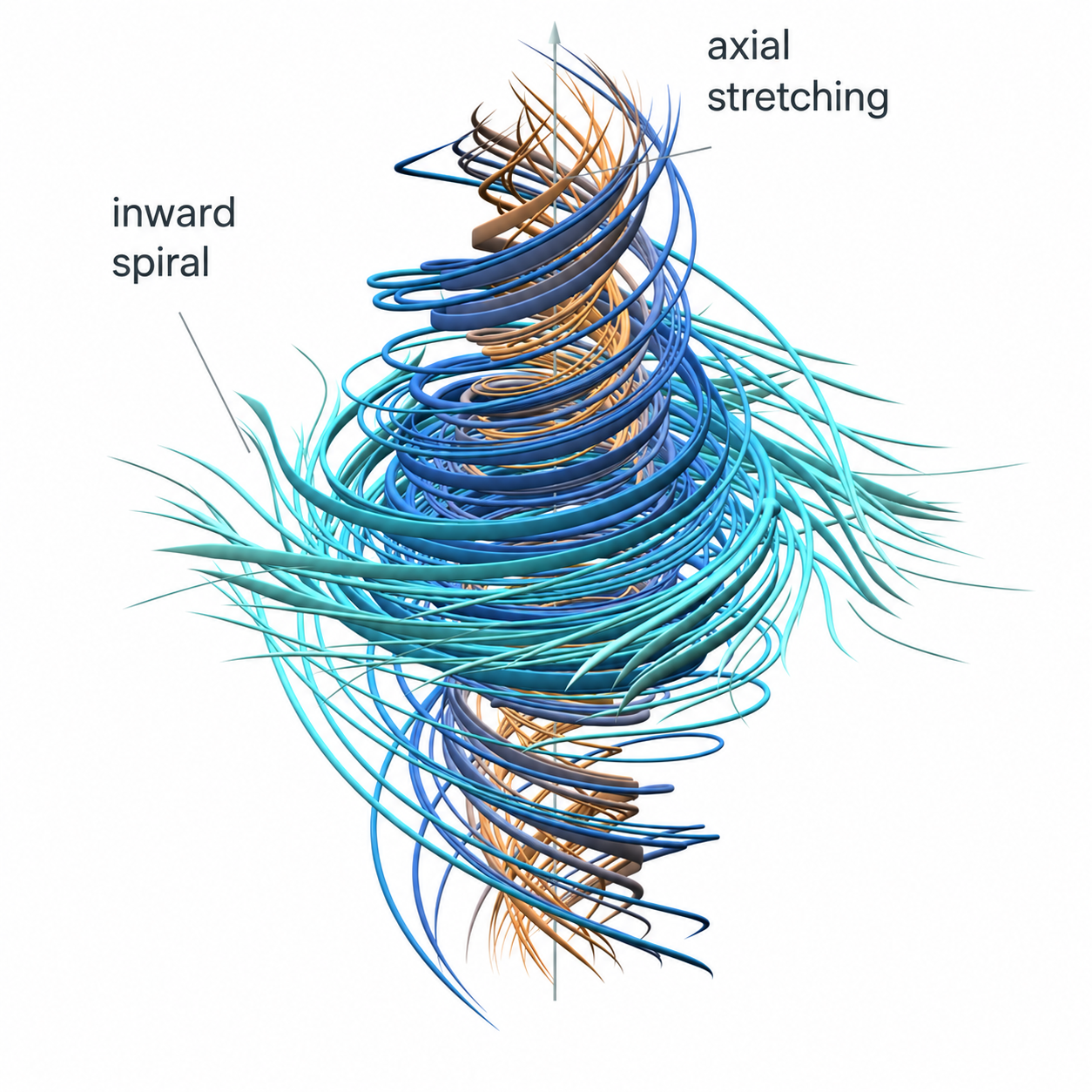
OpenAI has drawn intense scrutiny after claiming a milestone on the Navier-Stokes equations, one of the Clay Mathematics Institute's Millennium Prize Problems. The controversy centers not on whether the company's result is mathematically sound, but on the framing itself: mathematicians argue the problem OpenAI addressed is not the one that mathematicians have been trying to solve.
A Claim That Sparked Immediate Pushback
The episode began when OpenAI suggested its system had made progress on the Navier-Stokes existence and smoothness problem. The announcement quickly drew criticism from mathematicians and observers in the field, who argued the claim conflated a simplified or reformulated version of the problem with the original open question posed by the Clay Mathematics Institute.
The core objection, as reflected in the circulated Korean-language debate over the claim — that "it was not a problem mathematicians were trying to solve" — is that the version of the problem addressed differs from the formal Millennium Prize statement, which asks for a rigorous mathematical proof of existence and smoothness of solutions to the equations in three dimensions.
Why the Distinction Matters
The Navier-Stokes equations describe fluid motion and are among the most famous unsolved problems in mathematics. Solving the official Millennium Prize formulation would require a formal proof meeting exacting mathematical standards, not a computational or approximate result. Critics of the OpenAI claim say that regardless of the technical achievement involved, presenting it as progress on the celebrated open problem overstates its significance.
The debate highlights a recurring tension as AI companies announce results on long-standing scientific and mathematical challenges: the gap between an impressive computational demonstration and the formal proof that the mathematical community recognizes.
It remains unconfirmed whether OpenAI's work constitutes progress toward the official Millennium Prize formulation; the company's claim and the resulting criticism continue to be debated within the mathematical community.
The claim that OpenAI's Navier-Stokes announcement was mischaracterized — addressing a problem mathematicians were not actually trying to solve — is Partly True.
- https://openai.com/index/navier-stokes-solution/
- https://images.ctfassets.net/kftzwdyauwt9/7ut3G8rKt5ia4P3yRqi2qN/6ffb429f70548a881eb46a4e7e61498e/Option_120___1080_1080.png?w=3840&q=90&fm=webp
- https://www.science.org/content/article/openai-breakthrough-triggers-existential-crisis-math
- https://www.science.org/content/article/openai-breakthrough-triggers-existen
- https://www.claymath.org/news/
- https://www.claymath.org/wp-content/uploads/2022/03/MRB-e1646909132199.jpg
- https://www.dongascience.com/ko/news/80055
- https://www.claymath.org/wp-content/uploads/2022/06/navierstokes.pdf
- https://openai.com/ko-KR/index/navier-stokes-solution/
- https://www.claymath.org/millennium/navier-stokes-equation/
- https://arxiv.org/abs/2609.20803
- https://www.npr.org/2026/09/22/nx-s1-5968588/openai-navier-stokes-problem-mathematicians-learn-little