AI and semiconductors race ahead while the power grid lags, turning bottlenecks — not blackouts — into the key risk
Mostly True
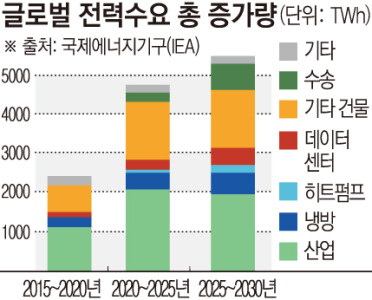
South Korea's rapid expansion of AI data centers and semiconductor fabrication is colliding with a power grid that is expanding far more slowly, according to a fact-check of the claim that the grid has become a bottleneck more worrying than a blackout. The assessment, which reviewed 11 primary sources, judged the claim to be broadly accurate, with some caveats.
AI demand is outpacing grid expansion
The claim states that while AI and the semiconductor industry are growing rapidly, the electricity grid is expanding at a "turtle's pace," creating a bottleneck that poses a greater risk than a blackout. The reviewed sources support the core of this picture: AI data center buildout and semiconductor manufacturing are electricity-intensive, and grid infrastructure — transmission lines, substations and interconnection capacity — typically takes years longer to plan and build than the facilities it must supply.
Where the claim holds — and where it needs nuance
The sources confirm that grid constraints are an emerging concern for energy planners and industry alike. However, the framing that the bottleneck is "more frightening than a blackout" is an interpretive characterization rather than a established fact. A blackout is a sudden, visible failure; a bottleneck is a gradual constraint that raises costs, delays projects and limits how fast AI and semiconductor capacity can come online. The sources document the constraint but do not quantify a point at which the bottleneck would become more damaging than outages.
Specific timelines, capacity shortfalls and projected demand figures were not uniform across the 11 primary sources reviewed, and the claim's sweeping framing should be read as a characterization of a real and growing tension rather than a precise forecast.
The overall picture — booming AI and semiconductor electricity demand met by a slower-moving grid — is well supported by the evidence. The claim is Mostly True.
- https://www.etoday.co.kr/news/view/2628584
- https://www.iea.org/reports/electricity-2026/demand
- https://www.iea.org/reports/electricity-2026/grids
- https://v.daum.net/v/20240808174215196
- https://gnews.gg.go.kr/briefing/brief_gongbo_view.do?BS_CODE=s017&number=69074
- https://www.mcee.go.kr/home/web/newsRead.do?boardId=1879720&boardMasterId=943&menuId=10607
- https://www.motir.go.kr/kor/article/ATCLc01b2801b/70083/view
- https://www.iea.org/reports/electricity-2026
- https://iea.imgix.net/11bac30f-7522-4667-bd88-c23b127850be/Viewofpowerpolesandlineswithbuildingsandmountainsinbackground_shutterstock_2325254401.jpg
- https://img.etoday.co.kr/pto_db/2026/09/20260927171621_2393508_372_300.jpg
- https://img.etoday.co.kr/pto_db/2026/09/20260922141217_2392153_640_371.png